Your voice is the one instrument you can't trade in for a backup. A guitar goes out of tune and you swap strings; a mic breaks and you grab another. Strain your voice and you're stuck with the only one you've got. A little preparation before you step up to a microphone goes a long way toward protecting it, and toward getting a take you're actually proud of.

Here's what we walk singers through before, during, and after sessions at Sure Sound.

Warm Up Like You Mean It

Think of it the way an athlete treats stretching before a game: skip it and you're asking for tension, strain, and a flatter performance. Give yourself ten minutes and your voice will thank you.

01

Breathe From the Diaphragm

Let your ribs and stomach expand as you inhale, not your chest and shoulders. Take a few slow, deep breaths, hold briefly, then release in one long, steady exhale. Your breath is the engine behind everything else your voice does.

02

Loosen Up With Lip Trills

Take a deep breath and hum a rolling "brrr" up and down through your range, keeping your lips loose and your throat relaxed. It's an easy way to engage your breath support without putting any strain on your cords.

03

Release Your Jaw & Face

Big yawns, gentle jaw stretches, a few tongue twisters, even a light massage along your jawline all help release tension that would otherwise show up in your tone. Loose muscles make room for a fuller, cleaner sound.

04

Ease In With Gentle Humming

Keep your mouth closed and hum softly through a few different vowel shapes, working from a comfortable volume up. It's a low-effort way to check in with your range before you ask more of it.

05

Run a Few Scales

Starting around the middle of your range, sing scales down and then back up to the top. Stay aligned with your breath support the whole way through. It's less about hitting notes and more about waking the whole instrument up.

06

Cool Down After, Too

Singing raises blood flow to your larynx, so don't just stop cold. A few relaxed hums after a long session or performance helps your voice settle instead of staying keyed up.

Before You Book the Room

The work that pays off in the booth mostly happens before you ever get there. In the days leading up to a session, ease off anything that taxes your voice, shouting over loud rooms, late nights, a pack-a-day habit, and get some real rest instead. Staying hydrated matters more than almost anything else on this list; water helps your vocal folds do their job, while caffeine and alcohol tend to work against you.

Come in already warmed up rather than treating the booth as your warm-up space. A voice that arrives ready lets everyone focus on the performance instead of playing catch-up.

Once You're In the Booth

Vocal booth at Sure Sound Recording Studio

A comfortable performance starts with what you're hearing in your headphones. Speak up if your mix doesn't feel right, whether you want more of your own voice up front or a touch of reverb to sing against. An engineer would rather adjust your cans for two extra minutes than fight a tense, uncertain take.

Most singers do better hearing themselves in the room, not just through both ears sealed off in headphones, so don't hesitate to ask for one ear cracked open if that's how you're used to working.

Expect to record more than one full pass. Multiple takes give your engineer the material to build the strongest possible composite, and it's completely normal to punch in and rework a single line rather than run the whole song top to bottom every time.

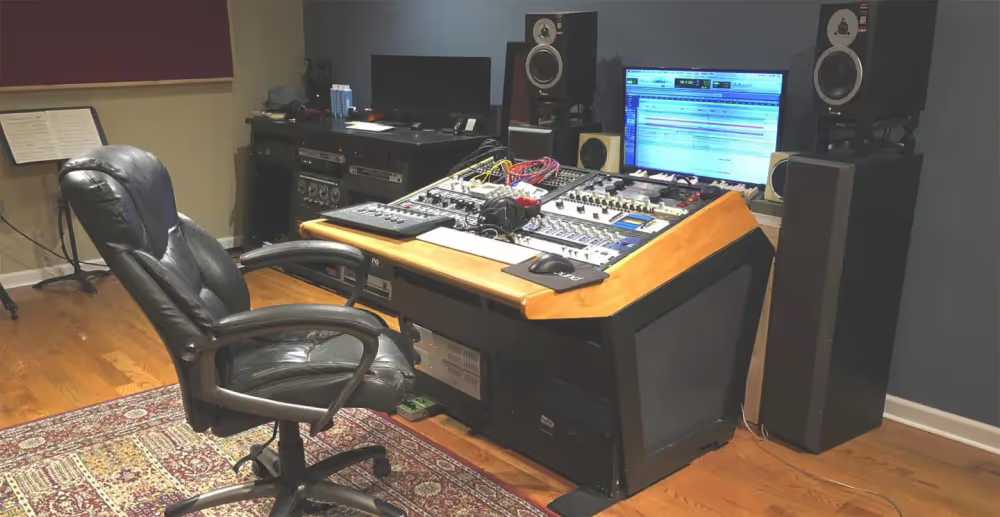
A quiet, low-pressure control room helps more than people expect. The fewer distractions and opinions in the room, the easier it is to relax into the performance, so we tend to keep sessions lean: you, your engineer, and whoever's actually directing the take.

The best takes usually come late in a session, right after the singer says "one more time." By then they've heard themselves enough to know exactly where to lean in.
Sure Sound Recording Studio

Know the Warning Signs

A little hoarseness after a big night is normal. Persistent hoarseness, pain when you speak or sing, a noticeably reduced range, or a voice that just won't bounce back after rest are different, and worth taking seriously. Overuse and misuse of your voice over time can lead to real, treatable conditions in the vocal folds, and catching them early almost always means an easier recovery.

If something feels consistently off with your voice, the right move is a visit to an ENT or a licensed voice therapist, not pushing through it for the next session. Your instrument is worth that appointment.

Ready to put a warmed-up voice to tape? Book a session at Sure Sound →

Making a record? See how we approach music production and mixing. Looking for voiceover or ADR instead? Visit our Voiceover Recording Studio page, or see the full list of studio services.

Book a Session

Let's Create Something Extraordinary

Whether you're tracking a record, recording ADR for film, or producing a podcast. We're ready when you are.